


Understanding Decentralized Autonomous Organizations (DAOs)
With an estimated $4.1 billion lost to DeFi hacks in 2024, the importance of secure and robust organizational structures in blockchain is more critical than ever. Decentralized Autonomous Organizations (DAOs) are stepping into the spotlight, revolutionizing how we think about governance, investments, and community involvement in blockchain. In this article, we‘ll dive deep into DAOs, their functionality, advantages, and future prospects, particularly in emerging markets like Vietnam.
What are DAOs?
At their core, DAOs are organizations represented by rules encoded as a computer program. These organizations are decentralized and not based on traditional hierarchical structures. Instead of a board of directors, decisions are made collectively by members who hold tokens, and all activities are executed automatically via smart contracts.
Think of a DAO as a community-driven venture where participants vote on decisions and share profits, similar to an investment club, but automated through blockchain technology.
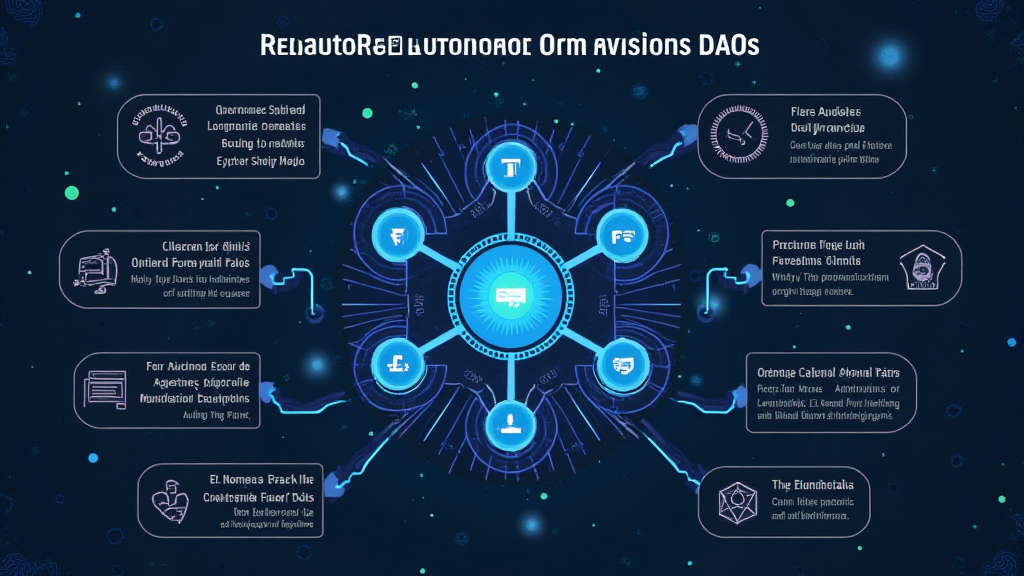
The Structure of a DAO
DAOs are characterized by several key components that facilitate their operation and governance. Here are the primary structural elements:
ong>Smart Contracts: ong> The backbone of DAOs, smart contracts execute predefined actions based on decisions made by token holders.ong>Tokens: ong> Members use tokens to participate in votes, finance operations, and earn rewards.ong>Governance Framework: ong> This defines how decisions are made. Usually, more tokens equal more voting power.ong>Transparency: ong> Every transaction and decision-making process is recorded on the blockchain, providing complete transparency.
Benefits of DAOs
DAOs offer a new way of structuring organizations with many benefits:
ong>Decentralization: ong> Eliminates single points of failure, distributing power among members.ong>Transparency: ong> All transactions are public and auditable, enhancing trust within the community.ong>Global Participation: ong> Individuals from around the world can participate, regardless of geographical barriers.ong>Reduced Costs: ong> By automating processes, DAOs can minimize operational costs.
Challenges Facing DAOs
Despite their advantages, DAOs face several challenges:
ong>Legal Uncertainty: ong> Many jurisdictions struggle to define DAOs within existing legal frameworks.ong>Security Risks: ong> Vulnerabilities in smart contracts can lead to significant losses, as evidenced by recent security breaches.ong>Member Participation: ong> Low engagement can lead to poor decision-making.
DAOs in Vietnam
The Vietnamese market is rapidly embracing blockchain technology, with a significant uptick in user engagement. Recent data indicates a
Local DAOs could empower individuals to participate in investments, philanthropy, and community governance while bypassing traditional barriers. By leveraging smart contracts, DAOs in Vietnam can foster economic participation and development.
Case Study: A Vietnamese DAO
Consider a Vietnamese DAO focused on supporting local startups. By pooling capital from token holders, the DAO can invest in promising ventures. Each member votes on which projects to fund, ensuring that the collective interests of the community are met.
How to Participate in a DAO
Participating in a DAO can be broken down into simple steps:
ong>Hold Tokens: ong> Acquire tokens of the DAO you wish to join.ong>Learn the Governance Process: ong> Understand how voting works within the DAO.ong>Engage: ong> Participate in discussions and votes to influence decisions.
Future of DAOs
As the world becomes more interconnected, the relevance of DAOs is expected to grow exponentially. They represent a shift from centralized to decentralized governance structures across various sectors.
Experts project that by 2025, DAOs could control upwards of
Conclusion
Understanding decentralized autonomous organizations (DAOs) is crucial in navigating the future of blockchain technology. With their potential to redefine governance and community engagement, particularly in vibrant markets like Vietnam, DAOs could be the key to creating more democratic and decentralized systems.
Whether you’re a seasoned blockchain enthusiast or new to the space, embracing DAOs can provide unique opportunities for participation in the ever-evolving digital economy.
For more insights on blockchain and decentralized technologies, explore our resources at ef=”https://cryptohubble.com”>cryptohubble.
<em>Authored by Dr. Jane Nguyen, a blockchain specialist with over 20 published papers and a lead auditor for several high-profile projects.em>


