Introduction
In 2024, the cryptocurrency landscape saw a staggering $4.1 billion lost to security breaches and hacks across DeFi platforms. With figures like these, ensuring the security of your digital assets is more critical than ever. The debate between
This article aims to provide comprehensive insights into the strengths and weaknesses of both hardware and software wallets. We’ll dive deep into their functionalities, security features, and usability, helping you make an informed decision for your cryptocurrency needs.
What is a Hardware Wallet?
A
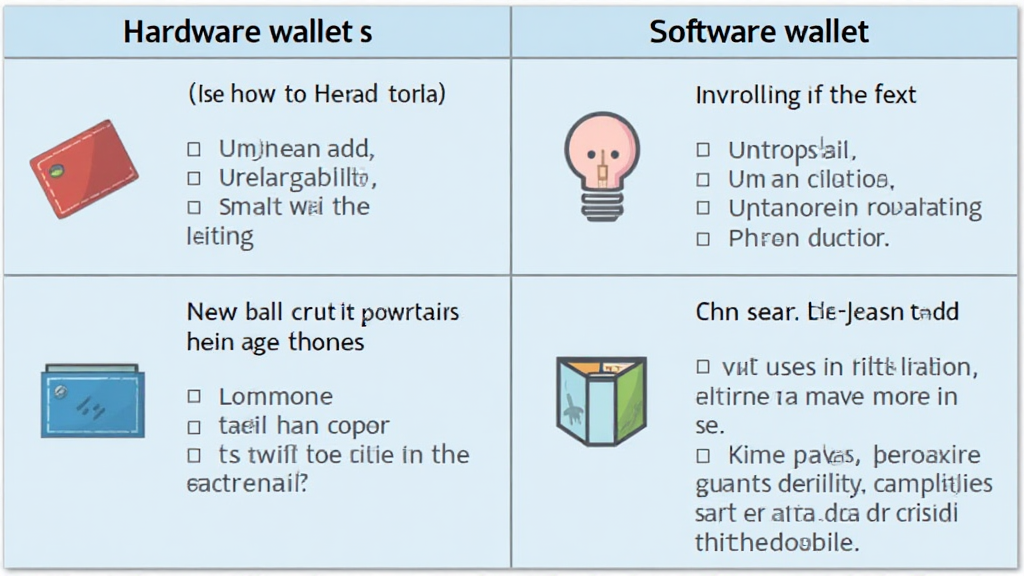
ong>Physical Security: ong> Being a physical device, it is immune to malware attacks that can affect software environments.ong>Cold Storage: ong> Hardware wallets store your keys offline, minimizing the chances of unauthorized access.ong>User Control: ong> With a hardware wallet, you have full control over your private keys.
What is a Software Wallet?
A
ong>Convenience: ong> Software wallets are typically user-friendly and convenient for regular transactions.ong>Variety: ong> There are many options available, including mobile apps and browser extensions.ong>Accessibility: ong> Being online, you can access your funds more quickly through a software wallet.
Comparative Analysis: Hardware Wallet vs Software Wallet
Let’s break down the comparison based on some critical aspects:
Security
When comparing
User Experience
While hardware wallets excel in security, the user experience can sometimes feel cumbersome due to the physical nature of the device. On the other hand, software wallets offer immediate access and easy usability for day-to-day transactions.
Cost
Hardware wallets can be expensive, usually ranging from $50 to $200, while software wallets are often free to download, although they may include transaction fees. Make sure to calculate the balance between security and affordability based on your trading habits.
When to Use a Hardware Wallet
Hardware wallets are ideal for users who:
- Hold a significant amount of cryptocurrency.
- Value security above accessibility.
- Regularly engage in et=”_blank” href=”https://cryptohubble.com/?p=7494″>long-term investment strategies.
When to Use a Software Wallet
Software wallets are suitable for users who:
- Trade frequently and require quick access to funds.
- Handle smaller amounts of cryptocurrencies.
- Prioritize convenience and user-friendliness.
Local Insights: The Growing Crypto Market in Vietnam
Recent trends indicate that Vietnam is witnessing a surge in cryptocurrency adoption, with a reported
This emphasizes the importance of understanding the differences between hardware and software wallets, especially in a rapidly evolving digital economy.
Conclusion
To sum it up, the choice between a
As the digital landscape progresses into 2025, staying informed about security measures is not just prudent but vital. Ensure that your assets are protected, whether you choose to keep them in a hardware vault or a software application.
For more insights on trading strategies and crypto security, check out ef=”https://hibt.com/” target=”_blank”>hibt.com. Remember, the key to successful investments lies in informed decision-making.
About the Author
John Doe is a well-respected blockchain consultant with over 10 years of experience in the cryptocurrency field. He has published more than 20 research papers on blockchain security and has managed the auditing of projects valued at upwards of $1 billion.