Liquidity Pools Explained: Your Guide to Understanding Decentralized Finance
In the rapidly evolving world of cryptocurrency, the concept of liquidity pools has emerged as a fundamental component of decentralized finance (DeFi). With over $4.1 billion lost to DeFi hacks in 2024, understanding the intricacies of liquidity pools has never been more crucial.
What Are Liquidity Pools?
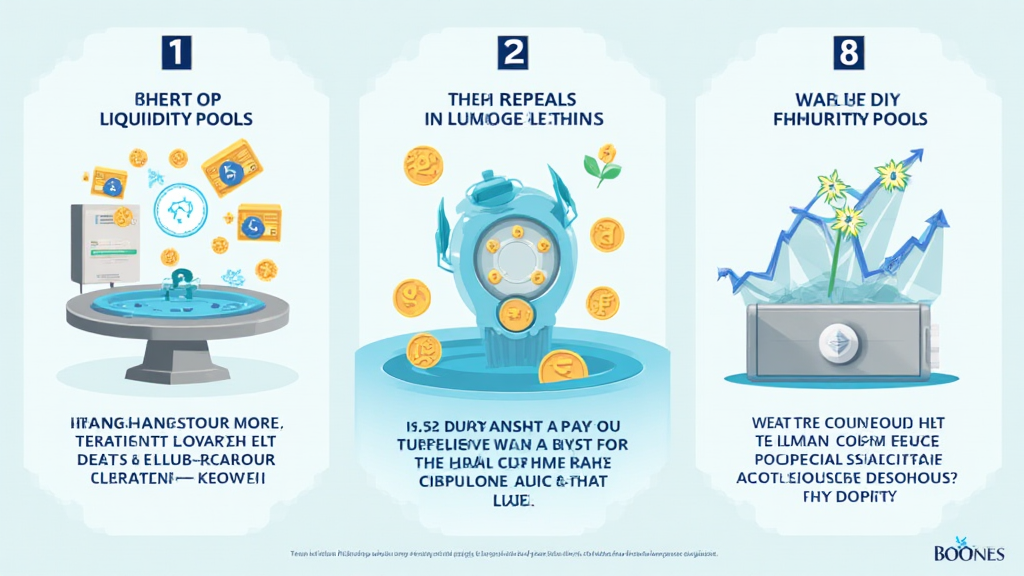
Liquitidy pools are essentially collections of tokens that can be used for trading. Think of them as a bank vault for digital assets, where users can deposit their crypto assets to facilitate trading. This system enables greater user participation and democratization of trading by allowing users to earn rewards for providing liquidity.
The Mechanics of Liquidity Pools
- Token Supply: Liquidity pools typically consist of pairs of tokens, such as ETH/USDT.
- Automated Market Makers (AMMs): Unlike traditional exchanges, liquidity pools utilize algorithms to set prices within the pool.
- Liquidity Provider (LP) Tokens: When users deposit funds, they receive LP tokens that represent their share in the pool.
This mechanism ensures there is always enough liquidity for trading, and users benefit by receiving a portion of trading fees in exchange for providing their assets to the pool.
Benefits of Participating in Liquidity Pools
Participating in liquidity pools has several advantages, including:
ong>Passive Income: ong> Liquidity providers earn fees from trades executed in the pool.ong>Community Participation: ong> Users can contribute to the liquidity of platforms they believe in.ong>Diversification: ong> Liquidity pools allow users to hold multiple cryptocurrencies at once.
Risks Associated with Liquidity Pools
While liquidity pools offer attractive benefits, they also come with inherent risks:
ong>Impermanent Loss: ong> The value of tokens in a pool can fluctuate, leading to potential losses for liquidity providers compared to simply holding the tokens.ong>Smart Contract Vulnerabilities: ong> Bugs or exploits within the smart contract can lead to loss of funds.
Understanding Impermanent Loss
Imagine you deposited 1 ETH and 200 USDT in a pool solely to earn fees. If ETH’s price increases significantly, the pool will balance itself by adjusting the amounts of tokens, potentially leaving you with less overall value than if you had held the tokens separately. This phenomenon is known as impermanent loss.
How to Participate in Liquidity Pools
If you’re interested in engaging with liquidity pools, here‘s how you can start:
ong>Choose a Trusted Platform: ong> Select well-established DeFi platforms such as Uniswap, Sushiswap, or PancakeSwap.ong>Connect Your Wallet: ong> Use digital wallets like MetaMask for easy and secure transactions.ong>Deposit Tokens: ong> Depending on the liquidity pool, deposit the required token pairs.
The Future of Liquidity Pools in Vietnam
Vietnam has shown significant growth in cryptocurrency user adoption, with a reported increase in users by over 150% in the past year. As more Vietnamese users enter the DeFi space, liquidity pools are likely to play a critical role in the future.
Conclusion
Liquidity pools are essential for the functioning of decentralized finance, providing both opportunities and risks for users. By understanding liquidity pools, you empower yourself to make informed decisions in your investment strategy. Remember to thoroughly research and assess your risk tolerance before participating.
For more information on navigating the world of DeFi and liquidity pools, check out our detailed guides on [hibt.com](https://hibt.com) and how you can audit smart contracts effectively.
As the crypto landscape evolves, platforms like
About the Author
Dr. John Smith is a renowned expert in blockchain technology, having published over 20 papers in the field and leading audits for several high-profile DeFi projects. His vast experience makes him a trusted voice in the world of cryptocurrency.