


Introduction
In 2024, the blockchain landscape was marred by over $4.1 billion lost due to hacks in the decentralized finance (DeFi) sector. With such staggering losses, it becomes imperative to explore the underlying technology that powers these financial ecosystems. This brings us to the essential comparison between modular blockchains and monolithic architectures. The functionality, security, and scalability of blockchain platforms hinge significantly on their structure. In this article, we aim to demystify the two approaches, compare their potential benefits, and examine their implications for the future of digital assets.
Understanding Modular Blockchains
Modular blockchains consist of independent layers that handle different aspects of the blockchain ecosystem, including consensus, data availability, and execution. The benefits of such separation lay in their potential to optimize efficiency and innovation.
- Separation of Concerns: Each layer can be specialized, allowing innovative consensus mechanisms or execution environments to be created without needing to overhaul the core system.
- Scalability: By offloading certain processes to secondary layers, modular blockchains can handle a higher transaction throughput than monolithic structures.
- Interoperability: These blockchains are designed to communicate across ecosystems easily, potentially increasing the efficiency of cross-chain transactions.
Pros and Cons of Modular Blockchains
While modular blockchain systems offer significant advantages, they are not without limitations.
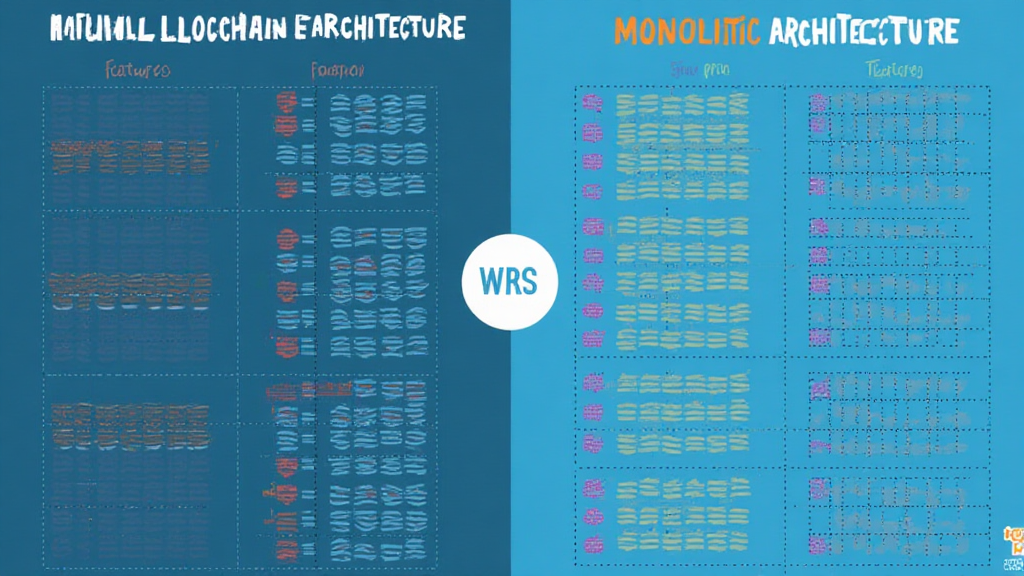
- Pros:
- High flexibility allows for rapid innovation.
- Optimized security through decentralized independent layers.
- Efficient resource allocation leads to lower transaction fees.
- Cons:
- Complex architecture may confuse stakeholders.
- Interdependencies could introduce vulnerabilities.
- Still evolving; may lack comprehensive governance frameworks.
Monolithic Blockchains Explained
In contrast to modular architectures, monolithic blockchains host all functionalities within a single layer. While this traditional approach simplifies many aspects of the blockchain deployment, it can come at a cost.
- Simplicity: One cohesive system means less friction when it comes to integration or understanding.
- Proven Technology: Many successful cryptocurrencies and networks operate on monolithic designs.
- Security through Cohesion: A single-layer structure minimizes potential attack vectors.
Pros and Cons of Monolithic Blockchains
Despite the strengths of monolithic blockchains, they do face inherent challenges that can impact their performance.
- Pros:
- Resource-intensive operations are often simpler to manage.
- Fewer technical barriers leave less room for exploitation.
- Many have existing communities that provide robust support.
- Cons:
- Struggles with scalability; transaction processing can slow down.
- Upgrades can be much more challenging.
- Risk of centralization if governance fails.
Real-World Applications and Examples
To effectively compare modular blockchain vs monolithic systems, analyzing real-world applications helps illuminate their practical implications.
- Modular Blockchains:
- Ethereum 2.0 is shifting towards a modular architecture with shards to increase scalability.
- Polygon: A modular scaling solution that enhances Ethereum’s capabilities.
- Monolithic Blockchains:
- Bitcoin remains the quintessential example of a monolithic blockchain, allowing secure peer-to-peer transactions without embellishment.
- Ethereum (in its original state) serves as a primary example as well, offering straightforward transaction processing.
Potential Trends and Projections
With blockchain technology ever-evolving, understanding future trends can aid in meaningful comparisons.
- According to Chainalysis, by 2025, we can expect a 35% increase in unique blockchain wallets in Vietnam, signaling an uptick in user engagement.
- As security challenges persist, the demand for enhanced security measures (or “tiêu chuẩn an ninh blockchain”) will shape the design choices of both modular and monolithic systems.
Conclusion
In determining the functionality and applicability of modular vs monolithic blockchains, it’s crucial to weigh unique industry demands. As the landscape of cryptocurrency continues to evolve, understanding the underlying technology can greatly impact investment decisions. Whether looking at the modular architectures promoting scalability or the grounded simplicity of monolithic systems, the future of blockchain lies in understanding these differences. Each has its place within the broader ecosystem. By engaging with the evolving blockchain space, investors and users alike can minimize risks and optimize their participation in this revolutionary financial technology.
For more in-depth insights, be sure to check out hibt.com. This platform compiles extensive research and information about blockchain technologies.


